


Before signing a study abroad consultancy contract, parents should check legal status, school partnerships, cost transparency, refund terms and real experience. Here are 7 practical checks.
Studying in Bulgaria: Dormitory or Renting Outside?
Dormitories are usually cheaper and more convenient for new students, while renting outside offers more privacy and independence. However, choosing accommodation in Bulgaria is not only about the rent – it also depends on location, living conditions, residence formalities and how well each student adapts.
For many Vietnamese families, accommodation is one of the biggest concerns when preparing for their child to study abroad. The right place helps control the budget and directly affects daily life, studies and the student’s sense of safety in the first months away from home.
In Bulgaria, the two common options are a university dormitory or renting outside. Each has its own advantages and drawbacks, so parents should understand the real conditions before deciding.

1. Dormitories in Bulgaria: a cost-saving option for international students
A dormitory is worth considering for students arriving in Bulgaria for the first time, especially when the family wants to prioritise the budget for tuition and other essentials.
Depending on the university, dormitories may be on campus or in student housing blocks. Rooms usually have basic furniture such as a bed, desk, wardrobe and shared living areas. Some have kitchens, laundry rooms or other shared facilities, but quality varies between buildings.
Are dormitories really cheap?
Compared with renting a private flat, dormitories usually have a clear cost advantage. Some universities in Bulgaria charge around EUR 100 per month or less, roughly VND 3 million at an assumed rate of VND 30,000 per euro.
However, this is only a reference for certain room types, not a price that applies to every university. The actual cost depends on the number of roommates, room conditions, policies for international students and included services.
Families should ask whether the fee includes electricity, water, heating and internet. A room with low rent but many extra service charges can still end up costing more than expected.
The biggest advantage is not only the price
For first-year students, a dormitory is also a way to integrate into university life. Living near other students makes it easier to make friends, share study experience and help each other with daily life.
This is a real advantage for students who have never lived away from home or are not yet used to public transport, shopping and dealing with formalities abroad.
Dormitories also have drawbacks. Students may have to share rooms, follow common rules and share living space. Those who need quiet or have different routines may take longer to adapt.
Another important point: international students are not automatically guaranteed a dormitory place. Rooms may be limited and some universities have selection procedures, registration deadlines or priority policies.
As soon as admission is confirmed, students should contact the university to check availability, move-in dates and a back-up plan if no place is allocated.

2. Renting outside: more independence, but needs careful preparation
Renting outside usually suits students who want their own space, flexible routines, or who are already familiar with life in Bulgaria.
Students can rent a private flat, a room in a shared flat, or rent a whole flat with friends and split the costs. Each option comes with a different level of privacy and financial responsibility.
How much does a flat in Sofia cost?
Sofia is the capital and one of Bulgaria’s largest higher education centres. Housing options are varied, but renting a private flat is usually much more expensive than a dormitory.
According to cost-of-living reference information published by Sofia University, a one-bedroom flat may cost around EUR 520 per month outside the centre and around EUR 680 per month in the city centre.
At an assumed rate of VND 30,000 per euro, this is roughly VND 15.6–20.4 million per month, before any extra costs depending on the contract.
These are reference figures, not fixed quotes. Actual rent varies by location, size, furnishing, condition and timing. Other Bulgarian cities have their own price levels, so Sofia rents should not be taken as representative of the whole country.
For students on a limited budget, sharing can be more sensible. For example, if two people share a flat, each person’s rent can drop considerably. Families still need to add electricity, water, heating, internet and other shared costs.
Extra costs that are often overlooked
Unlike a dormitory, renting outside may require a fairly large sum upfront. Besides the first month’s rent, landlords may ask for a deposit, and some agency deals add a service fee.
Students should also budget for heating in the cold season. Bulgarian winters are quite cold, so electricity or heating use can significantly affect bills depending on the type of home.
In addition, a cheap flat far from the university does not necessarily save money. Long commutes, transport costs and inconvenience on bad-weather days all need to be considered.
3. Dormitory vs renting outside in Bulgaria
| Criterion | Dormitory | Renting outside |
|---|---|---|
| Cost | Usually lower | Higher if renting alone; can drop when sharing |
| Space | May have to share a room | Flexible, more private |
| Facilities | Depend on the university’s buildings | Depend on the flat and budget |
| Living environment | Easy to socialise with other students | Free to choose flatmates |
| Location | Often near or convenient to the university | Chosen according to location and rent |
| Procedures | Register according to university rules | Find, negotiate and sign the contract yourself |
| Extra costs | Check service fees | Possible deposit, agency fee, utilities |
| Best for | First-year students, those wanting to save | Students who value privacy and independence |
Note that a shared dormitory room and a whole one-bedroom flat are not equivalent in size or facilities. To compare properly, families should look at total cost per person, living conditions and distance to the university.
4. Five things to check before choosing accommodation
Whether choosing a dormitory or renting outside, students should take time to verify a few important things before paying.
First, distance to the university. Don’t just look at kilometres – check the real travel time by bus, tram or on foot. An address near a public transport stop may be more convenient than a flat that looks close on the map but is hard to reach.
Second, total monthly cost. Rent is only part of the budget. Include electricity, water, heating, internet, any management fees and transport to know the real amount to pay.
Third, living conditions and safety. Check door locks, heating, hot water, electrical appliances, the surrounding area and the condition of the flat. If you cannot visit in person, ask for recent photos or videos, or ask a trusted person to check.
Fourth, the contract and deposit. When renting privately, clarify the rental term, termination conditions, repair responsibilities, fees and when the deposit will be returned. Never transfer money based only on advertising photos or promises by message without verifying the landlord.
Fifth, documents for residence formalities. Non-EU students may need to provide information about their accommodation for residence procedures in Bulgaria. Confirm that the landlord or management can provide the documents required under current rules.
These checks take extra time but help limit financial risks and unnecessary trouble in the first weeks after arrival.

5. Should first-year students choose a dormitory or rent outside?
For most first-time international students, if the university has a dormitory with basic living conditions and rooms are available, it is usually the better option at the start.
The reason is not just the lower cost. In a new country, students must adapt at the same time to the curriculum, language, transport, shopping and cultural differences. A stable place to live close to other students reduces the number of things they have to solve alone.
After one or two semesters, once they know the city better, have friends and understand real living costs, students can consider moving out if they want their own space or more independence.
This is not a mandatory path. If the university has no suitable dormitory, or the student has special needs, renting from the first year can still be a good choice if well prepared.
Parents should not judge quality of life by rent alone. A more expensive place is not necessarily more convenient, while a simple dormitory room can still meet study and living needs well.
6. Accommodation should be part of the study abroad budget
When calculating the cost of studying in Bulgaria, many families start with tuition and an average monthly living cost. However, the choice of accommodation can significantly change the total budget for the year.
With a low-cost dormitory place, students can save considerably compared with renting a private flat. Conversely, if the plan is to rent in Sofia, families should budget based on the real price of the type of home they want, rather than the minimum living cost often quoted in study abroad materials.
Besides monthly costs, the first year may include a deposit, household items, airport transfer and other set-up costs. Budgeting for these separately helps families stay in control and avoid financial pressure just after the student arrives.
Neither a dormitory nor renting outside is absolutely better. What matters is finding accommodation that fits the family’s finances, the student’s study needs and level of independence at each stage.
For families exploring study in Bulgaria, SHI Global advises on school selection and cost estimates and provides the information students need to prepare for life in Europe. Looking into accommodation early, together with the study programme and admission requirements, makes the study abroad plan more realistic. Contact us via Hotline/Zalo 0358 998 599 or book a free consultation.
Maybe you are interested


A 12-month Postgraduate Diploma at AceTek College Singapore for university graduates: 6 months of study + 6 months of internship with an allowance, no IELTS, indicative tuition SGD 6,540.

2027 admissions for the Singapore 6+6 vocational programme at AceTek College: 6 months of study + 6 months of paid internship, no IELTS, tuition from SGD 5,450.

No IELTS or weak English? Start with a preparatory course at Varna University of Management (VUM) or Sofia University, then progress to your degree. Requirements, pathway and 2027 dates.

SHI Global is recruiting for 100% English-taught master's programmes at Varna University of Management (Bulgaria) for February and September 2027: requirements, indicative costs and the 7-step pathway.

A step-by-step guide to the Singapore Student's Pass: when to apply, the 5-step ICA process, required documents, fees and processing time.
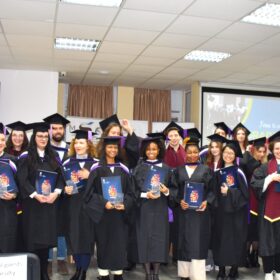
SHI Global is recruiting for 100% English-taught bachelor programmes at VUM, Bulgaria, for the September 2027 intake: requirements, indicative costs, the 7-step process and documents.

Economics, IT, engineering, medicine or hospitality? An overview of five groups of majors in Bulgaria and what each one requires from students.


