


Before signing a study abroad consultancy contract, parents should check legal status, school partnerships, cost transparency, refund terms and real experience. Here are 7 practical checks.
Studying in Bulgaria in English: what level of English do you need?
One reason Bulgaria attracts international students is its range of degree programmes taught in English. For Vietnamese students who have studied English for years, this is a clear advantage: you do not need to master Bulgarian before starting your main programme.
When looking at entry requirements, students usually ask one specific question: what IELTS score do I need to study in Bulgaria? It is a necessary question, but not enough. Meeting the English requirement to be admitted and being able to use English to study a degree are two different things.
English requirements differ between universities
There is no single IELTS score that applies to every programme in Bulgaria. Language requirements depend on the university, the programme, the level of study and how each university assesses international students’ English.
Some programmes require a certificate at a specific level, while some universities use their own test or assessment. Specialised fields may also require entrance exams or conditions in subject areas.
So rather than assuming you are eligible based on a general figure, check the requirements of the exact university and programme you plan to apply to. This is also why SHI usually assesses an application only once the student’s field and target university are reasonably clear.

Meeting entry requirements does not guarantee a smooth start
Suppose a student has met the university’s language requirement. That shows they have passed one admission condition, but it does not fully reflect what studying will be like after enrolment.
When a programme is taught entirely in English, the language is no longer a “subject”. It becomes the tool for almost all learning: following lectures, reading textbooks, finding sources, writing assignments, presenting, working in groups and talking with lecturers.
Difficulties often appear in this gap. A student may do well in an English test yet still take a long time to read a textbook chapter, struggle when a lecturer speaks quickly, or be unused to presenting an academic argument in English. This does not mean the student is “not good enough” to study abroad; academic English simply takes time to get used to.
So what level of English means you are really ready?
Instead of looking only at an IELTS score, try situations closer to university study. Can you watch a 15–20 minute lecture video in English and grasp the main points without Vietnamese subtitles? Can you read an article several pages long and summarise it? Are you confident presenting your view for a few minutes or discussing it in English? When a passage has many new words, can you use context to keep reading instead of looking up every word?
If most of these are still quite hard, that is no reason to give up your plan. It tells you exactly what to improve before enrolment. A year of well-directed preparation can make a much bigger difference than chasing one more band on a certificate.
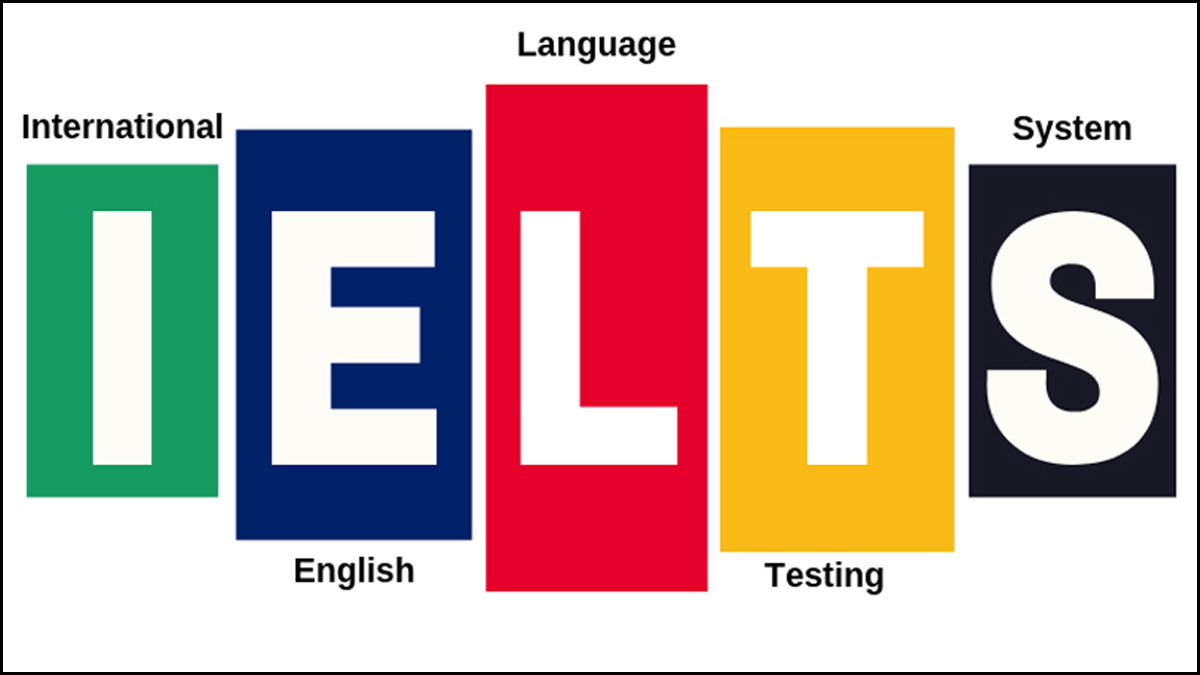
Don’t just practise IELTS – practise learning in English
If you have decided on an English-taught programme in Bulgaria, the time before departure is ideal for moving from learning English to using English to learn something else.
A student planning to study Business could start reading basic articles on economics, marketing or management in English. Someone planning to study IT could watch tutorials, read documentation or follow introductory courses in English. You do not need to understand everything at first; the aim is to get used to subject vocabulary and the way knowledge is expressed in an academic setting.
Listening can be practised the same way. Instead of only test-style dialogues, try lectures, TED Talks or educational videos, then note the main ideas in a few lines. This is the skill you will use constantly in lectures.
This kind of preparation has another benefit: you get to know your chosen field before enrolling. If you become more interested, that is a good sign. If the content turns out to be very different from what you imagined, there is still time to reconsider.
Do you need to learn Bulgarian before you go?
For programmes taught entirely in English, you do not need to be fluent in Bulgarian to start studying. That does not mean Bulgarian is unnecessary in daily life.
Knowing some basic phrases helps when shopping, using services, asking for directions or dealing with everyday situations. More importantly, learning the local language helps students understand where they live and fit in with the community.
Before departure there is no need to aim high in Bulgarian. Basic vocabulary and everyday phrases are a sensible start; the bigger priority remains using English for study.

A certificate gets you through admission; real English skills keep you going
When preparing to study abroad, a specific test score easily becomes the goal because it is clear and measurable. But after enrolment, no lecturer will ask your IELTS score before assigning a reading or a presentation.
At that point, what makes the difference is your ability to use English to take in knowledge, ask questions and express your ideas.
If you plan to study in Bulgaria in English, check the university’s language requirements so you know what to achieve, but don’t stop there. Use the time before enrolment to build the ability to study in English, especially following lectures, reading materials and communicating in an academic setting.
If you are not sure which Bulgarian programmes suit your current English level, SHI Global can compare your academic record, language skills and each university’s requirements with you and identify what to prepare before the intake. Hotline/Zalo 0358 998 599 · Contact us.
Maybe you are interested
A step-by-step guide to the Singapore Student's Pass: when to apply, the 5-step ICA process, required documents, fees and processing time.
HSK is the Chinese proficiency test for non-native speakers, used by Chinese universities for Chinese-taught programmes. Levels The familiar system has 6 levels. The new HSK 3.0 has 9 levels: beginner (1–3), intermediate (4–6) and advanced (7–9). A trial test…

Dormitory or private rental? A practical comparison of costs, space, procedures and hidden expenses for students in Bulgaria, plus five things to check before you pay.
To study Japanese in Japan and then move on to a vocational school or university, students need three things: entry-level Japanese, academic documents and financial documents. 1. Choose an intake and a school Japanese language schools usually take students in…
Before going abroad, most students spend a lot of time researching universities, tuition, accommodation and entry procedures. But once life in a European country actually begins, what surprises them is often small: a shop that closes earlier than expected, a…

“My child is in Grade 11 but still doesn’t know what career they want. If they haven’t chosen a major, should we start looking into studying abroad now?” This is a common concern for parents as their children enter the…
Economics, IT, engineering, medicine or hospitality? An overview of five groups of majors in Bulgaria and what each one requires from students.

SHI Global recruits for two schools in two areas: TCJ in Shinjuku, Tokyo and Hiki Academy in Saitama. Tokyo More universities and vocational schools, more admission fairs and activities. Higher rent and living costs in central Tokyo. Saitama Housing is…

The Chinese Government Scholarship, managed by the China Scholarship Council, supports international students at bachelor’s, master’s, doctoral and language level. Coverage A full scholarship usually covers tuition, on-campus accommodation (or a housing allowance), a monthly living stipend and medical insurance.…


